
 Stents & Implants
 Find a Doctor
 Lab Reports
 Health Checkup
 Book an Appointment
What Are the Most Common Neurological Disorders in Adults?
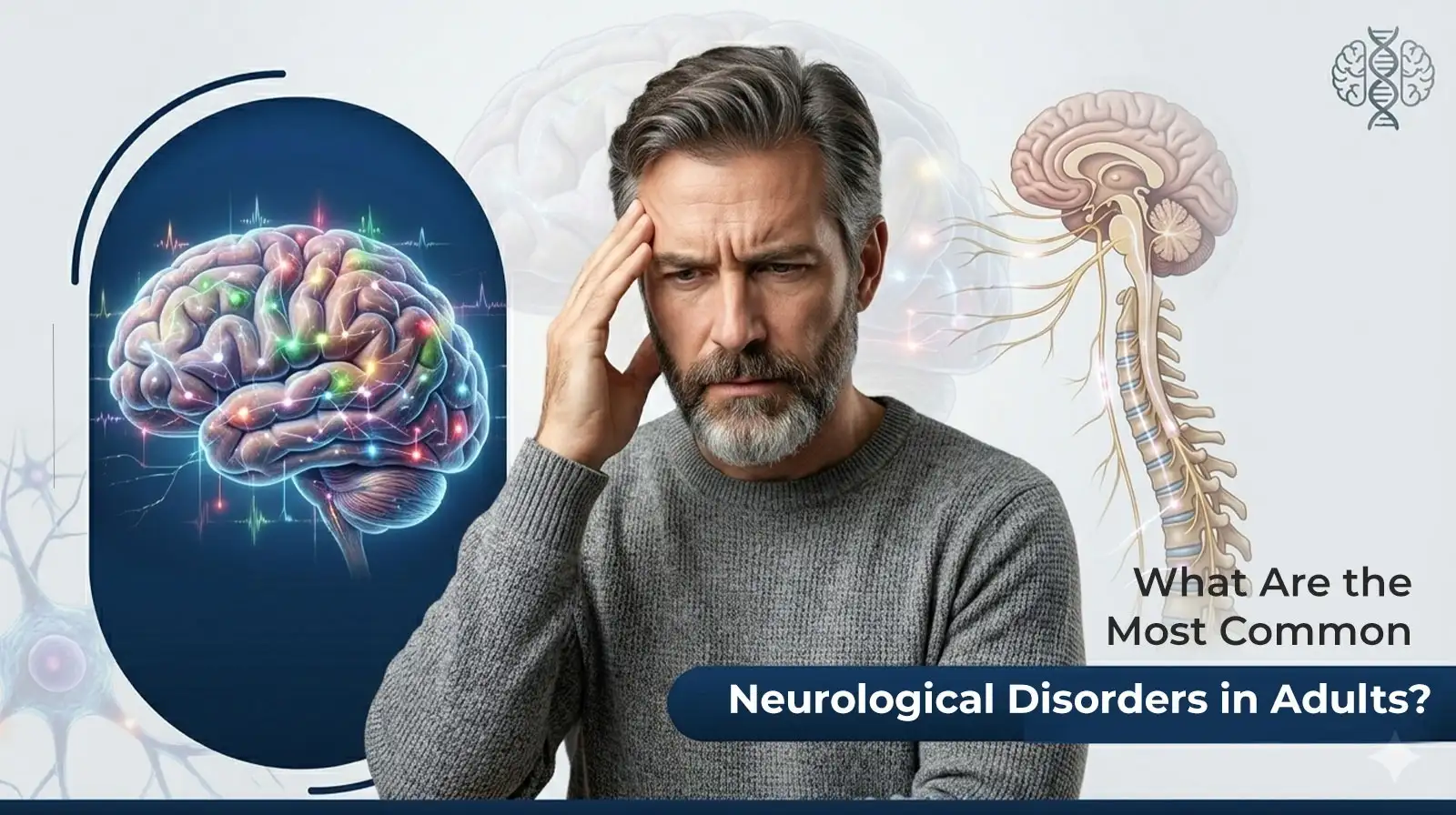
Most people do not think about their brains during a normal day. Everything works quietly in the background, so there is no reason to question it. Then suddenly, something small changes. You forget a simple thing. You feel a strange dizziness. Or a headache refuses to go away. At that point, the concern begins.
What makes this tricky is that these signs rarely appear loudly. They build slowly, and that is exactly why many adults ignore them in the beginning.
Why Neurological Health Often Gets Ignored
The brain does not send obvious warnings like other parts of the body. If you injure your hand, you see it immediately. But when something affects your nervous system, the signals are subtle and easy to dismiss.
People often blame stress, long working hours, or lack of sleep. While these can be valid reasons, they sometimes hide deeper neurological concerns that need attention.
Migraine and Recurrent Head Pain
Not every headache is just a headache. Some people experience a pattern where the pain keeps returning, often with sensitivity to light or even nausea. Over time, this starts interfering with concentration and daily work.
Many adults continue pushing through it, assuming it will settle on its own. However, identifying the cause early with the best neurologist in Delhi can make a noticeable difference in managing the condition.
Epilepsy and Unexpected Episodes
Epilepsy is often misunderstood because people associate it only with severe seizures. In reality, it can present itself in different forms, sometimes as brief lapses in awareness or unusual sensations.
What makes it challenging is the unpredictability. A person may feel completely normal one moment and experience an episode the next. With the right medical support, these episodes can be controlled effectively.
Stroke and Sudden Disruption
A stroke does not usually give much warning. One moment everything feels normal, and the next moment, speech becomes difficult or one side of the body feels weak.
This sudden shift is what makes stroke one of the most serious neurological conditions. Quick action is critical here. Reaching a neurology hospital in Delhi at the right time can reduce long-term complications significantly.
Parkinson’s Disease and Subtle Changes
Parkinson’s disease rarely starts with something dramatic. It often begins with a slight tremor, stiffness, or a feeling that movements are not as smooth as before.
Because these changes are gradual, many people overlook them. They assume it is part of ageing. But early diagnosis helps in slowing progression and maintaining a better quality of life.
Alzheimer’s Disease and Gradual Memory Loss
Forgetting things occasionally is normal. Everyone has moments where they misplace something or forget a name. However, when memory loss starts affecting daily routines, it becomes a concern.
Alzheimer’s disease develops slowly, and the changes are often first noticed by family members. Recognizing these early signs allows better planning, care, and medical support.
Peripheral Neuropathy and Nerve Sensations
Sometimes the body sends signals in the form of tingling or numbness, especially in the hands and feet. Many people ignore this, assuming it is temporary.
In practice, this may be a sign of peripheral neuropathy that is commonly associated with diseases such as diabetes. The best neurologist in Delhi can be consulted to determine the underlying cause and avoid further complications.
Indications That Cannot Be Overlooked
There are times when the body makes it clear that there is something that requires attention. These signals should not be ignored, as they can postpone treatment and complicate the recovery process.
- Recurrent headaches that are not responding to simple treatment.
- Difficulty in speaking clearly or suddenly.
- Loss of balance or unusual body movements.
- Problems with memory that begin to impact everyday activities.
They are not mere inconveniences. They are indicators that need an appropriate medical assessment.
Why Early Attention Matters
Waiting is one of the most frequent errors of adults. They do not seek help until the symptoms are severe. At this time, the condition might have already advanced.
Early treatment is not necessarily serious treatment. It can be as simple as being aware of what is going on and acting to control it before it gets out of hand.
Conclusion
Obvious symptoms do not necessarily accompany neurological diseases. They usually start with minor changes that appear simple to overlook. These changes may begin to influence the way an individual thinks, moves, and functions in everyday life over time.
In Jaipur Golden Hospital, Rohini, patients can enjoy the services of highly qualified specialists and modern equipment that is aimed at early diagnosis and individual treatment. The strategy is easy and straightforward, and that is to detect the issues at the earliest and offer the appropriate support at the appropriate moment to ensure that patients can go on with their lives with confidence.
FAQs
- What are the initial symptoms of neurological diseases in adults?
The initial symptoms may be frequent headaches, dizziness, memory loss, or coordination difficulties. These symptoms might be mild initially but need to be examined in case they persist.
- When is it necessary to see a neurologist?
When symptoms such as confusion, numbness, or recurring headaches start to influence everyday life or fail to respond to simple care, a consultation is required.
- Do neurological disorders necessarily have serious consequences?
Not all neurological conditions are severe. Others are treatable and can be controlled through early diagnosis and treatment, hence the importance of early medical care.
- Is it possible to prevent neurological disorders?
Although not every condition is preventable, a healthy lifestyle, stress management, and frequent checkups can help decrease the risk and contribute to overall brain health.