
 Stents & Implants
 Find a Doctor
 Lab Reports
 Health Checkup
 Book an Appointment
Heart Attack Symptoms in Women: What Makes Them Different?
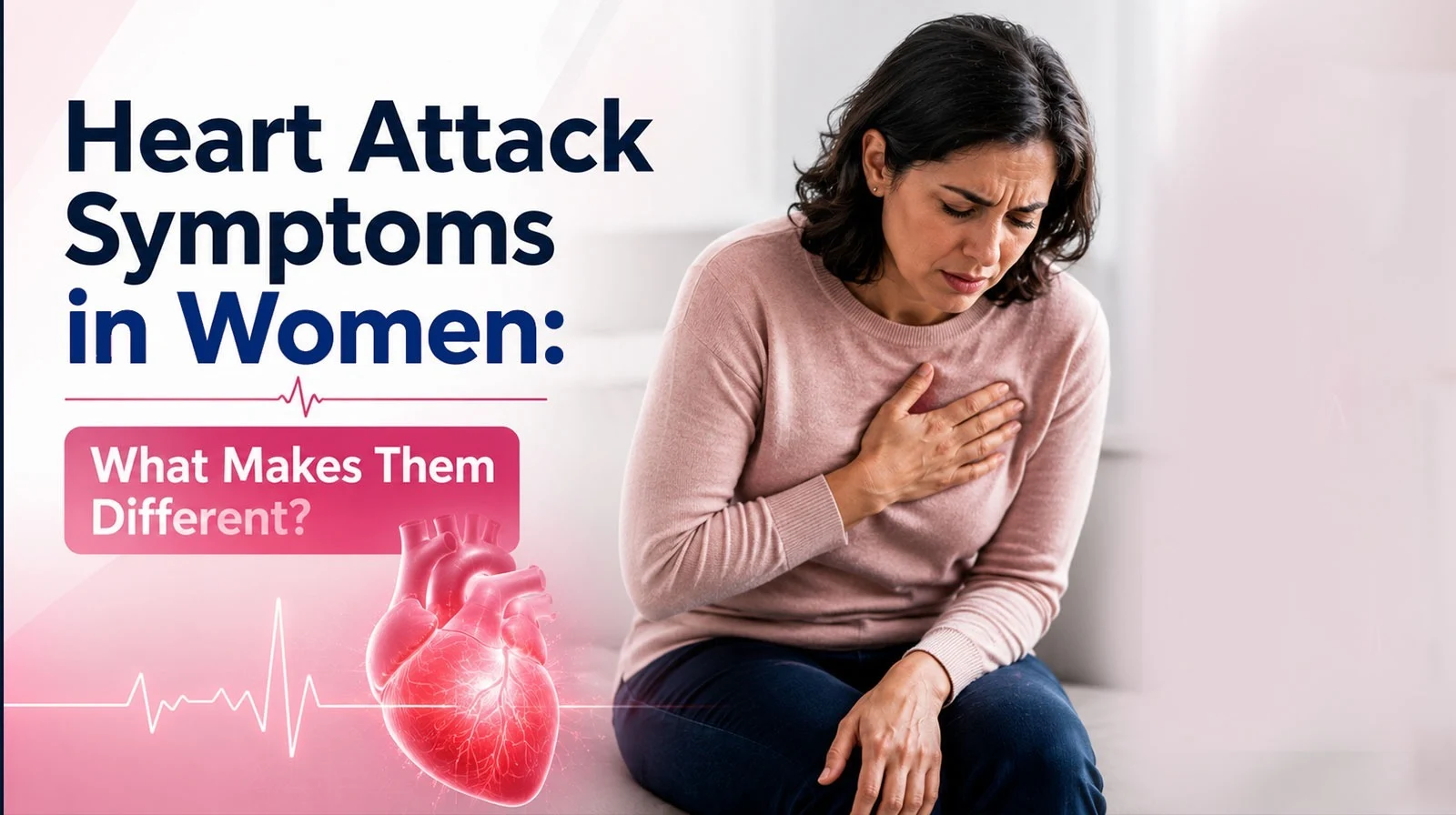
Most people picture a heart attack in the same way. A person suddenly clutches their chest, struggles to breathe, and collapses. While this can happen, it is not always how a heart attack presents itself, especially in women.
This difference creates a serious problem. Many women fail to recognise the warning signs because they do not match what they have seen in movies, television shows, or public awareness campaigns. In some cases, symptoms are mistaken for stress, exhaustion, indigestion, or even a lack of sleep.
That is why understanding the unique signs of a heart attack in women can make a life-saving difference.
The Symptoms Are Not Always Obvious
One reason heart attacks in women can be difficult to identify is that the symptoms are often less dramatic than expected.
Chest pain may be present, though not always of intense severity. Others characterize it as pressure, tightness, fullness or a feeling that suddenly appears and disappears.
The problem is that these symptoms can become incidental to daily living. A working woman may think she is just exhausted. A multi-tasking mom could blame stress. A person recovering from a busy week might simply ignore the pain.
Unfortunately, the heart does not always provide a second warning.
Extreme Fatigue Can Be An Early Signal
Imagine waking up after a full night’s sleep and still feeling completely drained.
Many women who later experience a heart attack report unusual fatigue days or even weeks before the event. This is not the normal tiredness that follows a long day. It often feels overwhelming and out of proportion to daily activity.
Simple tasks such as climbing stairs, carrying groceries, or walking short distances may suddenly feel much harder than usual.
Because fatigue has countless possible causes, it is often overlooked as a warning sign.
Shortness Of Breath Should Never Be Ignored
Breathlessness is another symptom that deserves attention.
Some women notice they become winded while performing activities that previously felt effortless. Others experience difficulty catching their breath even while resting.
When shortness of breath appears without a clear explanation, particularly when combined with other symptoms, medical evaluation becomes important.
Many patients seeking care at a heart hospital in Delhi report that breathlessness was one of the first signs they experienced before a cardiac event.
Pain May Appear In Unexpected Areas
Chest pain receives most of the attention when discussing heart attacks. Yet women often experience discomfort in different parts of the body.
These areas may include:
- Neck
- Jaw
- Upper back
- Shoulders
- Arms
- Upper abdomen
The discomfort may feel dull, aching, or persistent rather than sharp and intense.
Because these symptoms seem unrelated to the heart, they can delay diagnosis and treatment.
Digestive Symptoms Can Create Confusion
Many women describe symptoms that resemble digestive problems rather than heart disease.
Nausea, stomach discomfort, indigestion, or a feeling of fullness may occur before or during a heart attack.
Someone experiencing these signs might assume they ate something that disagreed with them. Others may reach for antacids and wait for the feeling to pass.
That delay can be dangerous.
Healthcare professionals often stress that unexplained digestive symptoms accompanied by fatigue, breathlessness, or discomfort elsewhere in the body should not be ignored.
Women Often Experience Symptoms Differently Than Men
Researchers continue to study why heart attack symptoms differ between men and women.
Hormonal influences, differences in blood vessel disease, and variations in how the body responds to reduced blood flow may all play a role.
What remains clear is that women frequently present with a wider range of symptoms. This makes awareness especially important.
Doctors at the best heart hospital in Delhi often encourage patients to pay attention to unusual changes rather than waiting for classic chest pain to appear.
The Risk Factors Deserve Equal Attention
Symptoms are only one part of the picture.
Several factors can increase the likelihood of heart disease in women, including:
- High blood pressure
- Diabetes
- Smoking
- High cholesterol
- Obesity
- Family history of heart disease
- Chronic stress
- Physical inactivity
Many of these factors develop gradually over time. Regular health screenings can help identify problems before they become serious.
Trust What Your Body Is Telling You
One of the most common stories shared by heart attack survivors involves ignoring symptoms.
People convince themselves that they are too young, too active, or too healthy to have a heart problem. Others hesitate because the symptoms seem vague or unusual.
Listening to your body matters.
If something feels different, persistent, or concerning, seeking medical advice is always the safer choice.
Patients frequently visit a heart hospital in Delhi after initially dismissing symptoms that later turned out to be related to heart disease.
Early Action Saves Lives
Time remains one of the most important factors during a heart attack.
The earlier treatment begins, the greater the opportunity to protect the heart muscle and improve outcomes. Waiting for symptoms to become severe can reduce those opportunities.
That is why awareness, education, and timely medical attention remain powerful tools in reducing complications from heart disease.
Many specialists associated with the best heart surgery hospital in Delhi NCR emphasise that recognising symptoms early can significantly improve recovery and long-term health.
Conclusion
Most people have an image in their mind of what a heart attack looks like for someone who experiences it, especially women more than men. Excessive tiredness, shortness of breathing, nausea or vomiting, jaw discomfort, back pain and unexplained weakness may all be indicators. Understanding these variations in recognition may lead to women obtaining medical treatment sooner, which could decrease the likelihood of severe complications. Jaipur Golden Hospital offers experienced specialists and has full-fledged treatment services to cater to your needs. It is considered one of the most trusted heart hospitals in Delhi by several families, a favoured best heart hospital in Delhi, and also regarded as the best heart surgery hospital in Delhi NCR when it comes to caring for & treating any issues related to the heart.
FAQs
- Is it always the case that women have chest pains during a heart attack?
No. Although chest discomfort may be experienced, most women complain of fatigue, breathlessness, nausea, jaw pain, or back pain.
- What makes women sometimes undiagnosed with heart attacks?
The symptoms are less pronounced and can be similar to stress, digestive issues, or overall fatigue, which causes delays in treatment.
- What are the symptoms of a possible heart attack that I should seek medical attention for?
Any chest pain, dyspnoea, unusual fatigue, or pain in the jaw, neck, back, or arms that cannot be explained should be addressed immediately.
- Are younger women able to have heart attacks?
Yes. Though the risk tends to rise with age, younger women may also have a heart attack, especially when they have risk factors like smoking, diabetes, obesity, or a family history.