
 Stents & Implants
 Find a Doctor
 Lab Reports
 Health Checkup
 Book an Appointment
Kidney Stones: Causes, Symptoms, and Latest Treatment Options
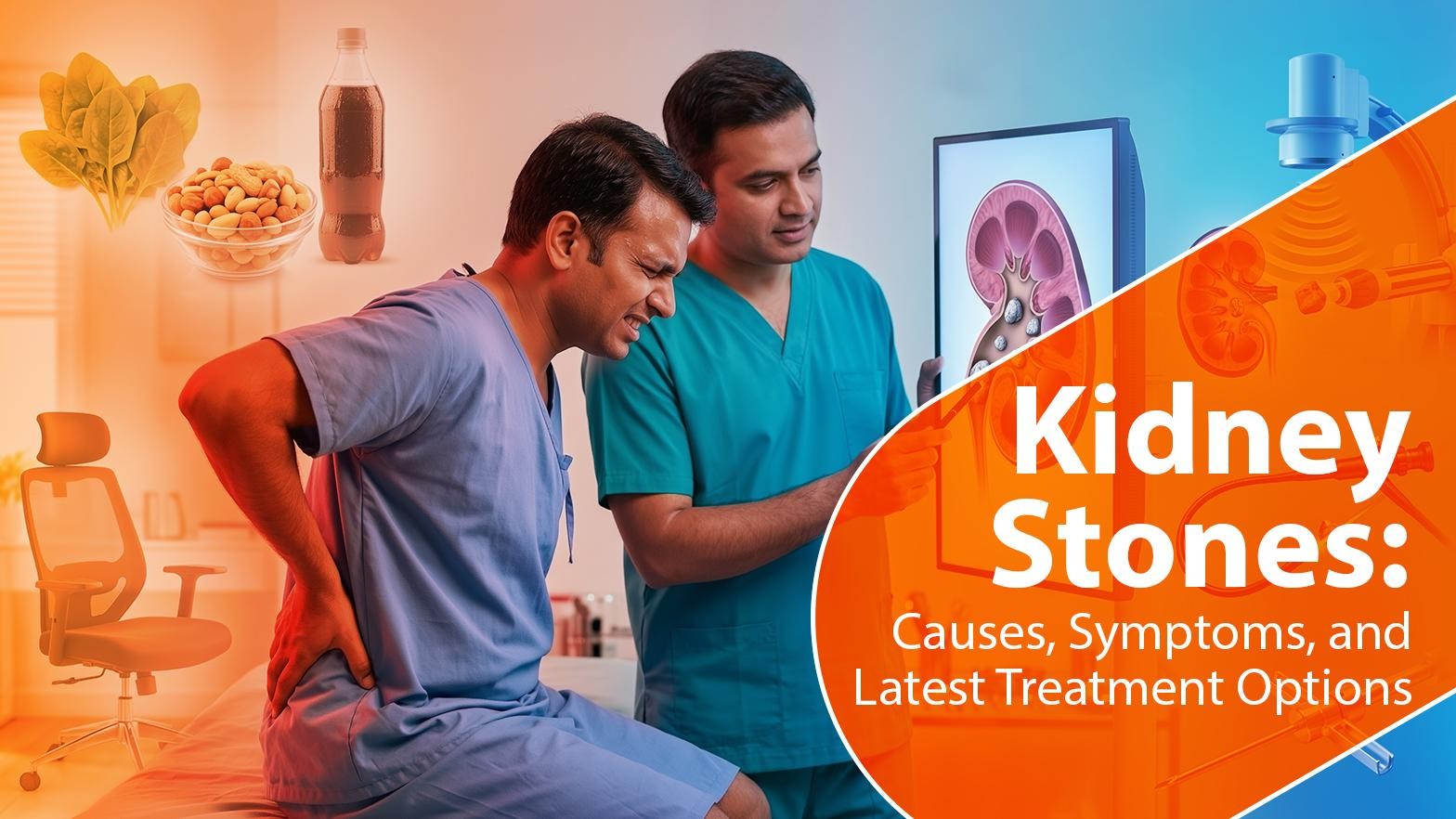
Kidney stones may seem minor in the beginning, but they can cause significant discomfort and disrupt daily life. For young professionals as well as elderly patients, this condition can result in repeated visits to hospitals if not treated properly. It is crucial to understand the actual causes behind kidney stones, recognise symptoms at an early stage, and evaluate treatment options available at present.
Several people believe that kidney stones are only a dietary problem. In reality, the causes are more complex and demand medical attention from trained experts. If ignored, stones can lead to infections, long-term kidney issues, or even surgical emergencies.
What Exactly Are Kidney Stones?
Kidney stones are solid deposits that form when minerals and salts crystallise inside the kidneys. These stones vary in size. Some may pass through the urinary tract without much trouble. Others may grow larger and obstruct the flow of urine, causing pain and infection.
People often notice symptoms only after the stone starts moving or blocking the urinary tract. This is usually when immediate intervention becomes necessary.
Primary Causes of Kidney Stones
Kidney stones can occur due to multiple overlapping reasons. Recognising these causes early may help prevent them –
- Low water intake which leads to concentrated urine.
- Diets high in sodium or oxalates that disturb the balance of minerals.
- Genetic tendencies that affect calcium or uric acid levels.
- Certain medical conditions such as urinary tract infections or digestive disorders.
- Use of some medications that increase mineral concentration in the body.
These causes do not always appear together. However, their presence increases the likelihood of stone formation over time.
Symptoms That Should Never Be Ignored
Some individuals confuse early symptoms of kidney stones with acidity, back pain, or muscle fatigue. The key is to observe consistency and location of discomfort. The following symptoms require professional medical attention –
- Sharp pain in the lower back or abdomen.
- Blood in urine or change in urine colour.
- Frequent urge to urinate but difficulty doing so.
- Nausea or vomiting combined with abdominal pain.
- Fever or chills in case of infection.
These signs should not be addressed casually. Consulting the best kidney specialist doctor in Delhi at the right time reduces future complications.
When to Visit a Specialist
In the majority of cases, self-diagnosis or over-the-counter drugs are inappropriate. An adequate diagnosis of the best kidney doctor in Delhi will include scans, blood tests, and urine samples. The tests are useful in determining the type of stone and its precise location.
Quick relief is guaranteed by hospitals with contemporary diagnostic laboratories and nephrology. Jaipur Golden Hospital (JGH) has always been considered as among the top hospitals in Delhi to receive urology and nephrology services. Its infrastructures facilitate proper diagnosis before customised treatment plans.
Modern Nephrology: Treatment Options
The treatment used depends on the size and the composition of the stone. Some of the small stones can be passed naturally, whereas some need sophisticated processes.
Non-Surgical Management –
- More fluid intake and dietary modifications.
- Taking drugs to loosen the muscles of the urinary tract.
- Prescription analgesic pain management.
- Surveillance using regular imaging and laboratory tests.
Surgical and Minimally Invasive Procedures –
- Shock wave lithotripsy (SWL) fractures stones with high-frequency sound waves.
- Ureteroscopy, which involves the removal of stones using thin scopes via the urinary tract.
- Percutaneous nephrolithotomy of large or complicated stones that need small incisions.
- Laser processes of very precise fragmentation.
Patients who receive their treatment at Jaipur Golden Hospital have the advantage of minimal invasive surgery and short stays at the hospital. The priority is to ensure that the problem of full stone clearance is achieved without harming the kidney.
Prevention of Kidney Stones in Everyday Life
Patients should never go back to their old ways once they have been treated. In the absence of preventive measures, stone recurrence is frequent. Frequent visits to the kidney specialist doctor in Delhi, who is the best, will assist in changing the habits of the patient in the long-term outcomes. Key preventive tips –
- Take sufficient water every day to keep urine watered down,
- Restrict salt, sugar and animal protein in daily meals,
- Calcium supplements should not be overused without recommendation by a doctor,
- Add fruits and green vegetables with high amounts of potassium in the meals,
- Eat well and do not become too dehydrated,
The habits also aid in minimising the chances of stone formation in addition to improving the health of the kidneys in general.
Why JGH to manage kidney stones?
Jaipur Golden Hospital is a hospital that gathers qualified urologists, nephrologists, and dieticians. Its multidisciplinary strategy enables early diagnosis and specific recovery strategies. JGH has ensured safety and recovery standards are high in emergency care, as well as planned procedures.
More to the point, patients are given adequate counselling and follow-up instructions after each treatment. This is why the hospital has continued to be the hospital of choice when patients seek the best kidney doctor in Delhi or the best hospital in Delhi with a proven history of success in nephrology.
FAQs
Are there any chances that kidney stones can be developed as a result of drinking too much?
Alcohol may be one of the causes of dehydration, which can elevate the concentration of minerals in urine. This may cause the formation of stones unless hydration is done correctly in the long run.
What are the most effective home treatments to prevent kidney stones?
It can be helped by drinking enough water during the day, eating less salty food, and consuming more citrus fruits. Home remedies are however, effective when used together with medical guidance.
Do kidney stones have non surgical treatment?
Yes, it is possible to pass smaller stones with the help of water intake and prescribed medicine. Depending on patient history, larger stones may need such procedures as lithotripsy or laser therapy.