
 Stents & Implants
 Find a Doctor
 Lab Reports
 Health Checkup
 Book an Appointment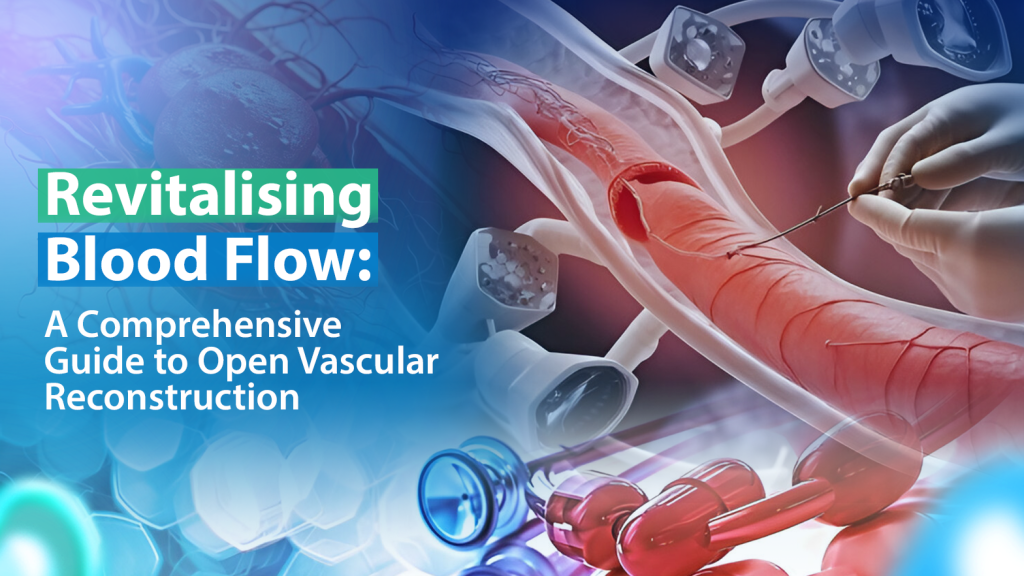
Blood vessels are the highways that transport oxygen and nutrients throughout the body. When these vessels become blocked or damaged, it can lead to serious health problems, ranging from leg pain and non-healing wounds to life-threatening conditions like strokes and heart attacks.
Open vascular reconstruction is a critical surgical method used to restore normal blood flow and save lives. Understanding what this procedure involves, when it is needed, and what to expect can help patients make informed decisions about their health.
Understanding Open Vascular Reconstruction
Vascular surgery can be defined as operations that restore, reconstruct or replace blood vessels that have been injured or diseased. While minimally invasive procedures involve using catheters and small cuts on the skin, open surgery entails a direct and detailed treatment of the artery or vein. It is usually used when the blockage is extensive, the vessel is irreversibly damaged, or when other less invasive procedures have not been effective.
In the process, the vascular specialist doctor may employ a part of another blood vessel from the patient’s body (called a bypass) or an artificial bypass to divert the blood flow around the obstruction. This enables oxygenated blood to flow to tissues that were hitherto deprived, thus enhancing their performance and reducing further injury.
Indications for Open Vascular Reconstruction
It is important to note that not all vascular issues call for an open surgery. Nevertheless, some circumstances make this intervention the best one:
- Peripheral Artery Disease (PAD): Percutaneous revascularisation is a treatment for severe narrowing or blockage of the arteries that supply the legs, and if left untreated, the condition may cause pain, ulcers, and gangrene.
- Aneurysms: When a blood vessel dilates because of the weakness of the vessel wall, it can burst at any time and cause severe bleeding.
- Carotid Artery Disease: Strokes can be caused by blockages in the arteries that supply blood to the brain.
- Trauma: Injuries to arteries that are significantly compromised usually need to be repaired through surgery.
It is therefore advisable to seek the services of a vascular specialist doctor as early as possible to establish whether one requires open reconstruction.
Preparing for the Surgery
Before the open vascular reconstruction is performed, patients are usually subjected to tests like angiograms, ultrasounds or CT scans to determine the exact location of the vascular problem. Pre-surgical assessments will also involve routine health screening to determine the fitness of the patient for surgery.
Selecting the right healthcare facility is very important. Choosing the best hospital in Delhi means that the patient is able to get the best diagnosis, the best surgeons, and the best care after the surgery.
The Procedure: What Happens During Surgery?
Surgery of the vessels is performed under general or regional anaesthesia, depending on the location and the severity of the pathology. The surgeon then proceeds to make a clean cut to reveal the affected blood vessel. Depending on the extent of the problem, they either clear the blockage, mend the vessel wall, or make a new channel for blood circulation by using a graft.
The operation may last for several hours, and patients are closely observed to ensure that they are stable. It is therefore important to ensure that the monitoring is done with a lot of precision and that the surgeons are skilled.
Recovery and Aftercare
The time taken to recover from open vascular reconstruction depends on the general health of the patient, the area of the body that was operated on, and the severity of the condition. Generally, hospitalisation lasts from several days to one week.
It is recommended that patients begin to move as soon as possible to avoid such conditions as blood clots. After the discharge, the patients are expected to change their lifestyle to enhance their success in the future. Doctors usually recommend:
- Quitting smoking
- Maintaining a healthy diet
- Engaging in regular exercise
- Managing conditions such as diabetes, hypertension, and cholesterol.
It is important to have follow-up visits to check on the repaired vessel and the general health of the blood vessels. This means that having a good relationship with a trusted vascular specialist doctor will help in the early detection of any arising complications.
Advantages of Early Intervention
Another advantage of early diagnosis and treatment is that it helps to avoid amputations, prevent strokes, and minimise the cases of emergency surgeries. It is for this reason that when vascular conditions are managed early, the patient is likely to have better results and quality of life.
The advantage of getting care from the best hospital in Delhi is that it is a centre of excellence with multiple specialities. Vascular surgeons, cardiologists, endocrinologists, and rehabilitation specialists collaborate to develop an individualised treatment plan that addresses the patient’s short-term needs and long-term goals.
Conclusion
Surgical repair of blood vessels is still a viable solution in the management of various vascular diseases. It can restore blood flow, prevent the need for amputations, avoid life-threatening conditions, and significantly enhance the patient’s quality of life.
This is why it is important to seek the help of a professional vascular specialist doctor and to be admitted to the best hospital in Delhi as early as possible when the symptoms appear. If patients are willing to follow the doctor’s advice, get professional help, and make some necessary changes in their daily routine, they can expect to lead an active life after the treatment.